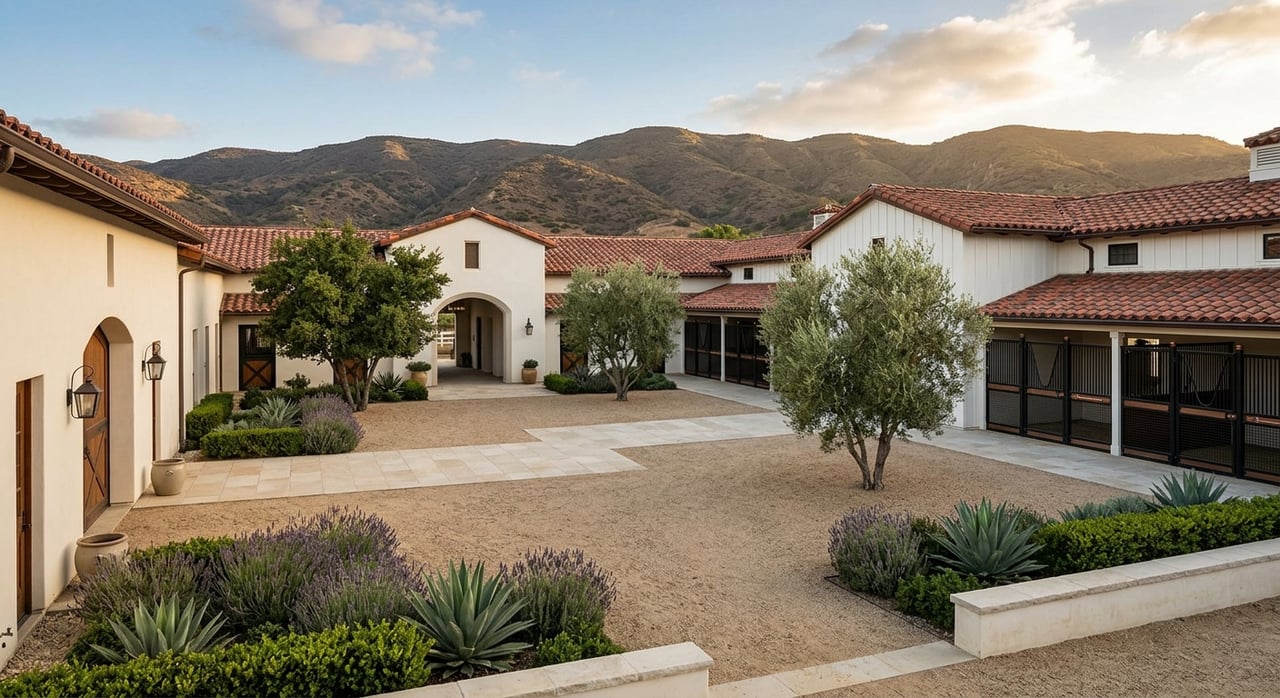
If you are dreaming about a horse property in the Santa Ynez Valley, it is easy to fall for the views first. Rolling land, barn doors, and open space can create a powerful first impression. But when you are buying equestrian real estate, the real question is much more practical: does the property actually work for how you plan to live, ride, and care for horses? This guide will help you evaluate the details that matter most so you can buy with more clarity and confidence. Let’s dive in.
Why Santa Ynez equestrian buying is different
The Santa Ynez Valley sits within unincorporated Santa Barbara County, which means county planning rules often shape what a property can legally support. That matters because a parcel that looks ideal for horses may still have limits tied to zoning, permits, or infrastructure.
For buyers, this is where discipline pays off. A beautiful ranch entrance or charming barn does not tell you whether the improvements were properly approved, whether the land is truly usable, or whether the setup will support daily horse life without expensive changes.
Start with zoning and legal use
Before you focus on style or finishes, confirm what the property is legally allowed to do. In Santa Barbara County, horse keeping is zoning-sensitive, and in several residential zones horses and similar large animals are limited to 1 animal per 20,000 square feet of lot area, usually with a maximum of five animals per lot.
That distinction matters if you plan to keep multiple horses or if you are considering a property with boarding, breeding, training, or riding-stable potential. Some of those uses may require added approvals depending on the zone and the parcel’s existing permit history.
What to verify early
- Current zoning designation
- Allowed number of horses based on lot size
- Whether boarding or commercial horse use is permitted
- Existing approvals for barns, arenas, corrals, and grading
- Permit history for guesthouses or other structures tied to the ranch layout
Santa Barbara County provides permit and archived-record lookups for unincorporated properties, and project requirements can vary. In practice, that means you should verify improvements rather than assume they are legal because they have been there for years.
Usable acreage matters more than raw acreage
A common mistake in equestrian property shopping is treating total acreage as the headline feature. In reality, usable acreage is usually far more important than the number on paper.
A parcel may be large, but if portions are steep, awkwardly shaped, crossed by easements, or difficult to access with equipment, it may not function well for horses. Site plans, topography, soils, vegetation, and encroachments all affect how practical the land really is.
What a workable horse layout should include
When you walk a property, picture daily use instead of a weekend showing. A practical setup often needs room for:
- Pasture or turnout areas
- Barn access and circulation
- Trailer parking and turnaround space
- Hay and feed delivery
- Manure storage
- Wash areas
- Equipment access through gates and open work zones
Gate placement matters more than many buyers expect. A property can feel spacious, but if trailers and maintenance equipment cannot move safely and easily, the layout may create frustration from day one.
Water, septic, and basic infrastructure deserve close attention
Rural property value often comes down to infrastructure you cannot fully appreciate from the driveway. Water is one of the biggest diligence items on any horse parcel.
Santa Barbara County residents draw water from a mix of groundwater, reservoirs, the State Water Project, desalination, and recycled water. On an equestrian property, you will want to understand how the parcel is actually served and whether that supply is reliable for day-to-day horse use.
Water questions worth asking
- Is the property on a private well or another water source?
- What is the well yield?
- Is there adequate storage?
- How is water pressure across the property?
- Has water quality been tested?
- How does the system perform seasonally?
If the parcel relies on a private septic system, that needs equal attention. In Santa Barbara County, a new or replacement septic system requires a permit, so buyers should review the age, condition, and status of the existing setup before closing.
Drainage can make or break usability
Santa Ynez has a relatively dry inland feel, but drainage still matters. County hydrology data show the Santa Ynez Fire Station’s long-run mean annual rainfall is 15.75 inches for 1951 through 2025.
That may not sound extreme, yet winter runoff, muddy paddocks, arena washout, and poorly placed manure storage can quickly affect how a horse property functions. Drainage is not just about appearance. It is about safety, maintenance, and protecting water quality.
Pay attention to these drainage clues
- Low spots that collect water
- Muddy turnout areas
- Erosion near barns or drive lanes
- Runoff paths toward creeks or waterways
- Poorly drained manure storage areas
- Arena edges that hold standing water
Manure management should also be evaluated before you buy, not after you move in. Storage should be placed away from areas where runoff can carry waste toward streams or other waterways, and good drainage at the storage site is essential.
Fencing should be safe and functional
Fence lines shape both horse safety and everyday management. Good fencing is not just decorative. It should be visible, durable, and safe if a horse comes into contact with it.
As you tour a property, look beyond curb appeal. Ask whether the fencing design supports turnout patterns, equipment access, and future maintenance, and whether gate placement makes movement easier rather than harder.
A quick fencing checklist
- Is the fencing clearly visible to horses?
- Does it appear sturdy and well maintained?
- Are gates wide enough for trailers and equipment?
- Do pasture divisions support safe turnout?
- Are there signs of patchwork repairs or weak sections?
A property with smart fencing and easy circulation often feels calmer and more useful in everyday life. That can also matter at resale when another horse buyer evaluates the setup.
Barns and arenas should add function
In equestrian real estate, not every custom improvement adds equal value. The most marketable barns and arenas are usually the ones that are permitted, practical, and easy to use.
A barn with power, water, sensible stall layout, and efficient access often contributes more than a highly personalized feature built around one owner’s specific routine. Buyers should think in terms of utility and future marketability, not only charm.
What to review in a barn
- Permit status
- Water and power access
- Stall layout and airflow
- Feed and tack storage
- Wash rack functionality
- Trailer and service access
- Relationship to turnout and arena areas
Arenas deserve their own level of scrutiny. Footing affects both ride quality and ongoing maintenance, and outdoor arenas perform best when base, drainage, slope, moisture, and surface management work together.
Arena questions to ask
- What is the base material?
- How does the arena drain?
- Is there irrigation or dust control?
- What riding discipline was the footing designed for?
- How much maintenance does the surface require?
- Are there ruts, soft zones, or hard spots?
An arena that is too soft, too hard, or poorly drained can become a costly problem. In some cases, a simple open riding space may be more appealing than an arena that looks impressive but rides poorly.
Trail access should be verified, not assumed
Trail access can be a major lifestyle draw in the Santa Ynez Valley. Santa Barbara County notes that county trails connect urban areas to national forest and other public lands, and Los Padres National Forest includes horseback riding on some routes.
Still, buyers should verify exactly what “trail access” means for a specific property. There is a big difference between deeded access, a public route, a nearby trailhead, and simple proximity to open land.
Ask for clarity on trail access
- Is access deeded or public?
- Is it on-site, adjacent, or nearby?
- Are there easements involved?
- Can you legally ride directly from the parcel?
- Is trailer access to a trailhead the more realistic setup?
This point matters for both lifestyle and resale. Verified access is a stronger feature than a vague claim tied to nearby open space.
Fire planning belongs in your due diligence
In parts of Santa Barbara County, fire planning is not something to leave until after closing. Santa Barbara County Fire says that since July 1, 2021, sellers of homes in high or very high fire severity zones in SRA or very high fire severity zones in LRA must provide defensible-space inspection documentation.
CAL FIRE also states that 100 feet of defensible space is required by law. If you are buying a horse property in one of these areas, you should understand the parcel’s current condition, maintenance obligations, and any work that may be needed.
Fire-related items to review
- Whether the parcel is in a relevant fire severity zone
- Current defensible-space documentation
- Vegetation clearance around structures
- Access for emergency vehicles
- Ongoing maintenance needs across the property
On larger ranch parcels, these details can affect both cost and day-to-day management. They are worth reviewing as early as possible in the transaction.
Think about resale from the start
Even if you are buying for lifestyle first, resale still matters. The strongest equestrian properties usually have the least ambiguity: clear permits, usable land, safe fencing, reliable water, good drainage, and improvements that match what horse buyers actually need.
Highly personalized features do not always return their cost. Improvements that are too commercial for the zoning, too niche in design, or too expensive relative to nearby comparable properties may not add value in the way owners expect.
Features that often support stronger resale
- Legal barn structures
- Functional turnout and pasture areas
- Wash areas and storage
- Safe, visible fencing
- Trailer-friendly access
- A rideable, well-maintained arena surface
- Clear documentation for systems and improvements
When a property is easy to understand, easy to insure, and easy to explain to the next buyer, it often stands on firmer ground in the market.
Bring in the right specialists
Older ranches and customized horse properties often need more than a standard home inspection. A practical buyer team may include a rural-property inspector, septic professional, well or water specialist, fencing or arena-footing contractor, and a fire defensible-space inspector if the parcel sits in a hazard zone.
That kind of diligence can help you separate true value from deferred maintenance or legal uncertainty. It also gives you a clearer picture of what ownership will feel like after closing, not just how the property shows on tour day.
Buying equestrian property in the Santa Ynez Valley is as much about verification as vision. When the land, legal use, infrastructure, and horse setup all align, you can buy a property that supports your lifestyle now and remains understandable and marketable later. If you are considering a horse property in Santa Ynez and want discreet, tailored guidance, Tyler Mearce offers private consultation informed by local market knowledge and a polished, concierge-level approach.
FAQs
What should you check first when buying equestrian property in Santa Ynez?
- Start with zoning, legal horse use, and permit history for barns, arenas, corrals, grading, and other improvements.
How many horses can a Santa Barbara County residential parcel typically support?
- In several residential zones, county code limits horses and similar large animals to 1 animal per 20,000 square feet of lot area, usually with a maximum of five animals per lot.
Why is usable acreage more important than total acreage on a horse property?
- Usable acreage shows how well the land can support turnout, trailer access, equipment movement, drainage, and daily horse care, while raw acreage alone may include steep or impractical areas.
What water issues matter on a Santa Ynez horse property?
- You should review water source, well yield, storage, pressure, seasonal reliability, and water quality before relying on the property for horses.
What should you ask about a riding arena on a Santa Ynez equestrian property?
- Ask about the base material, drainage, irrigation, dust control, footing type, maintenance needs, and whether the surface fits your intended riding discipline.
What does trail access mean on a Santa Ynez horse property listing?
- Trail access should be verified parcel by parcel because it may mean deeded access, a public route, a nearby trailhead, or simply proximity to open land.
Do fire rules affect horse property purchases in Santa Barbara County?
- Yes. In certain fire severity zones, sellers must provide defensible-space inspection documentation, and CAL FIRE requires 100 feet of defensible space by law.